
(La bici da pista: caratteristiche, componenti e differenze con la bici da strada -> leggi qui)
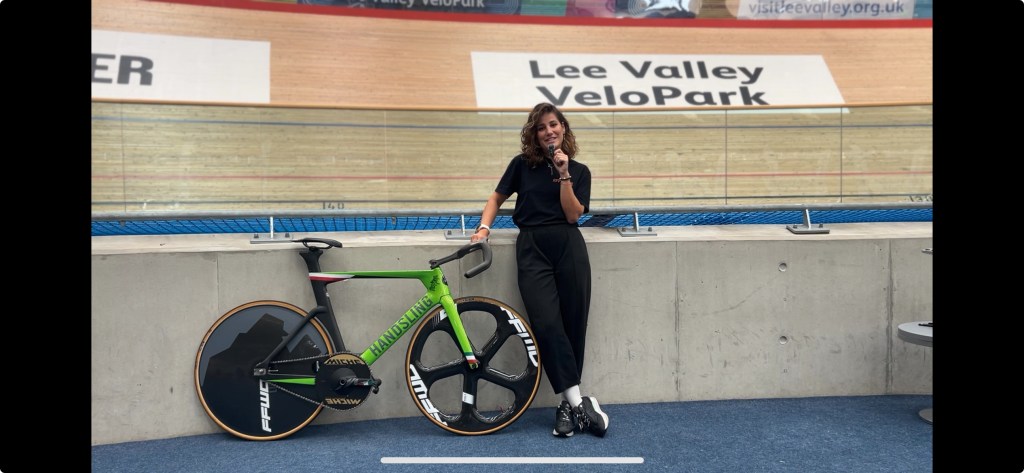
L’Angolo di Francesca — Episode 3
A track bike is an extremely simple machine in its structure, yet highly specialized.
Every single component has a precise purpose and is designed to be used only and exclusively in a velodrome.
Understanding how a track bike is built and how it differs from a road bike is essential, both for those who want to start riding on the track and for those who want to better understand what they are watching during a race.
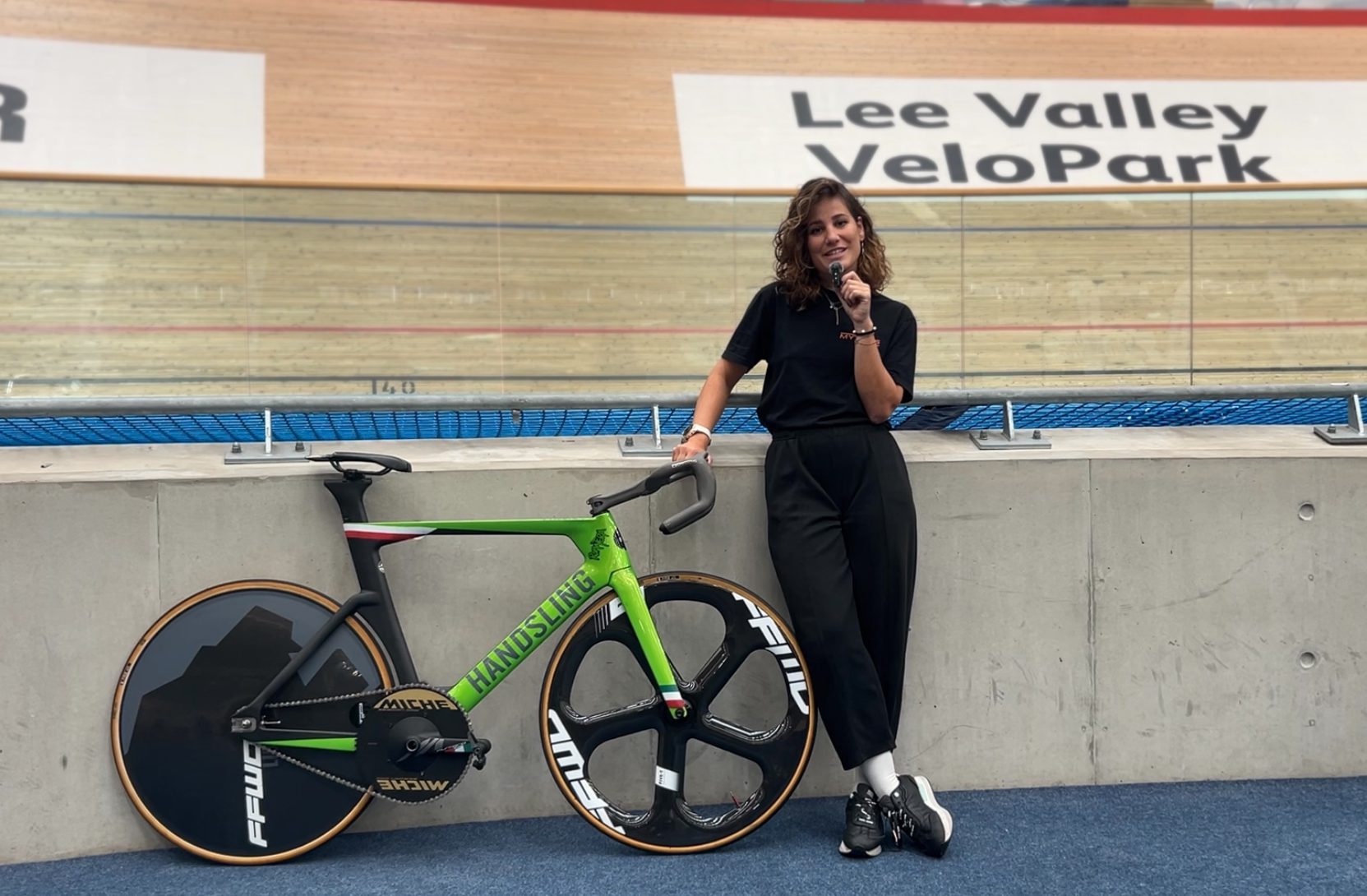
This article follows and expands on the same concepts explained in L’Angolo di Francesca – Episode 3, filmed at the Lee Valley Velodrome in London, the Olympic velodrome of the 2012 Games.
What a Track Bike Is and What It’s Designed For
A track bike is designed to:
- ride on a smooth, banked surface
- maintain very high speeds consistently
- remove anything that is not strictly necessary
In a velodrome, there are no climbs or descents, so weight is not as critical as it is on the road.
What really matters is having a bike that is:
- stiff
- reactive
- stable and predictable at high speed
The amount of power produced on the pedals on the track is extremely high, as are the sustained speeds. The bike must respond precisely and immediately.
Frame and Geometry: Why They’re Different from a Road Bike
The frame of a track bike is fundamentally different from that of a road bike:
- more aggressive geometry
- increased stiffness
- short rear triangle
- more forward riding position
On the track, it’s very common to use a larger frame size compared to the road.
For example, I personally use:
- size 54 on the road
- size 58 on the track
This is because track geometries are designed for high-speed stability and optimal power transfer.
Today, the difference between sprint and endurance frames is less pronounced than in the past: the real distinction often comes from components and position, rather than the frame itself.
Most track frames do not include:
- cable routing
- brake mounts
- bottle cage mounts
Wheels: One of the Most Visible Differences
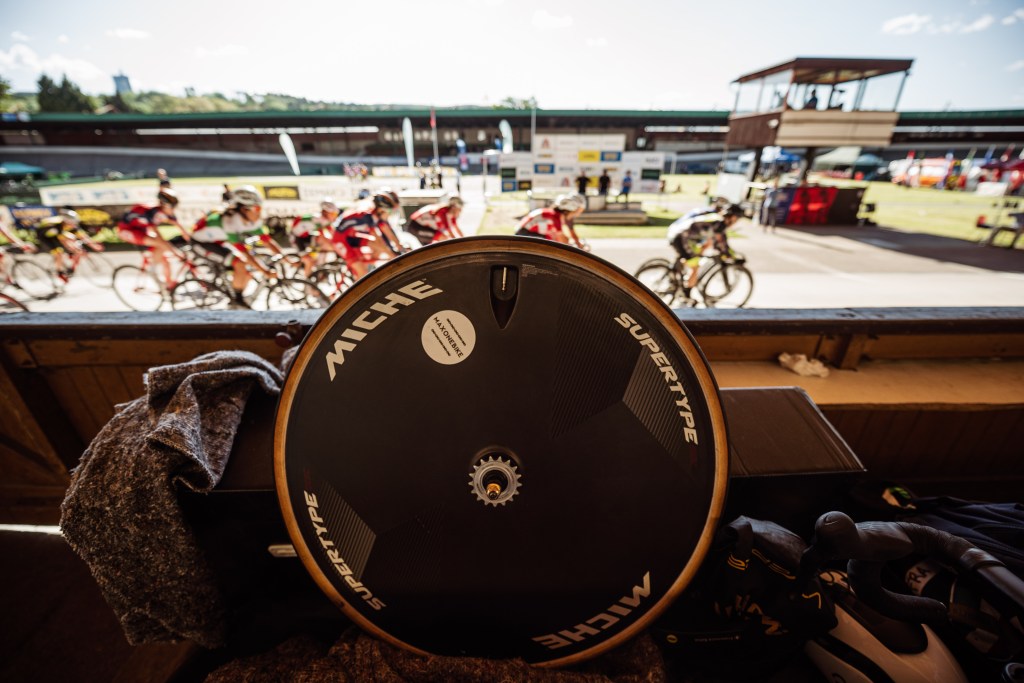
One of the first things you notice on a track bike is the wheels.
In my case, in the video I use:
- rear disc wheel
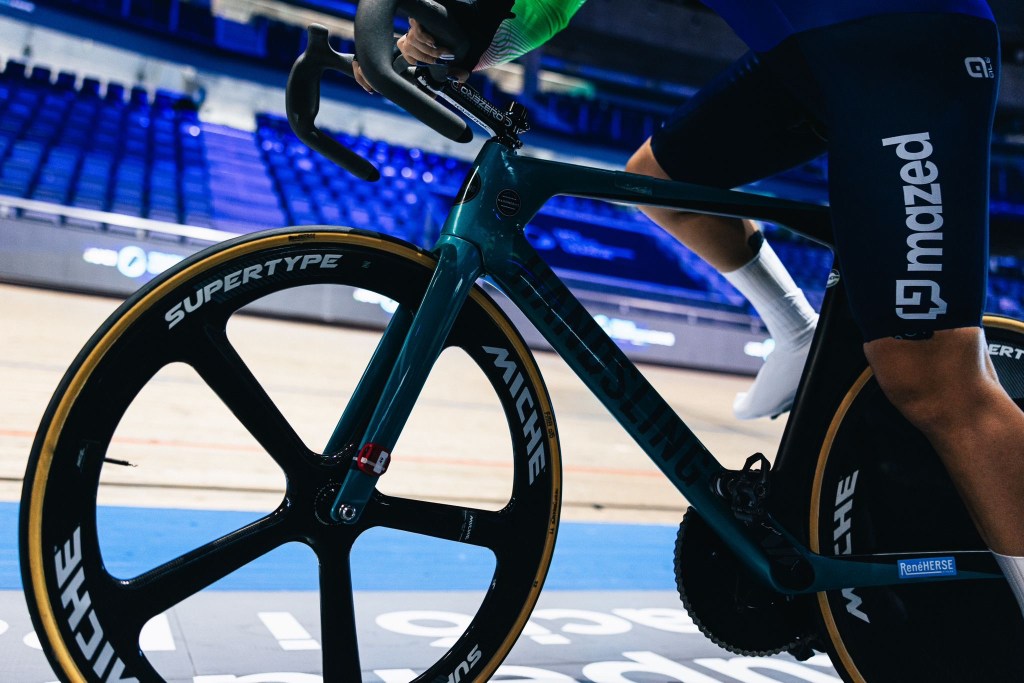
- five-spoke front wheel
On the track, it’s common to see:
- three-spoke wheels
- four-spoke wheels
- five-spoke wheels
- high-profile wheels
In some specific individual disciplines (not mass-start races), the use of a front disc wheel is also allowed.
Tubular vs Clincher
On the track, tubular tyres are still widely used, much more than on the road.
The main reason is riding feel:
- better control
- more predictable handling
- improved response during frequent changes of direction
For this reason, many athletes still prefer tubulars over clinchers, especially in bunch races.
Fixed Gear: The Fundamental Difference
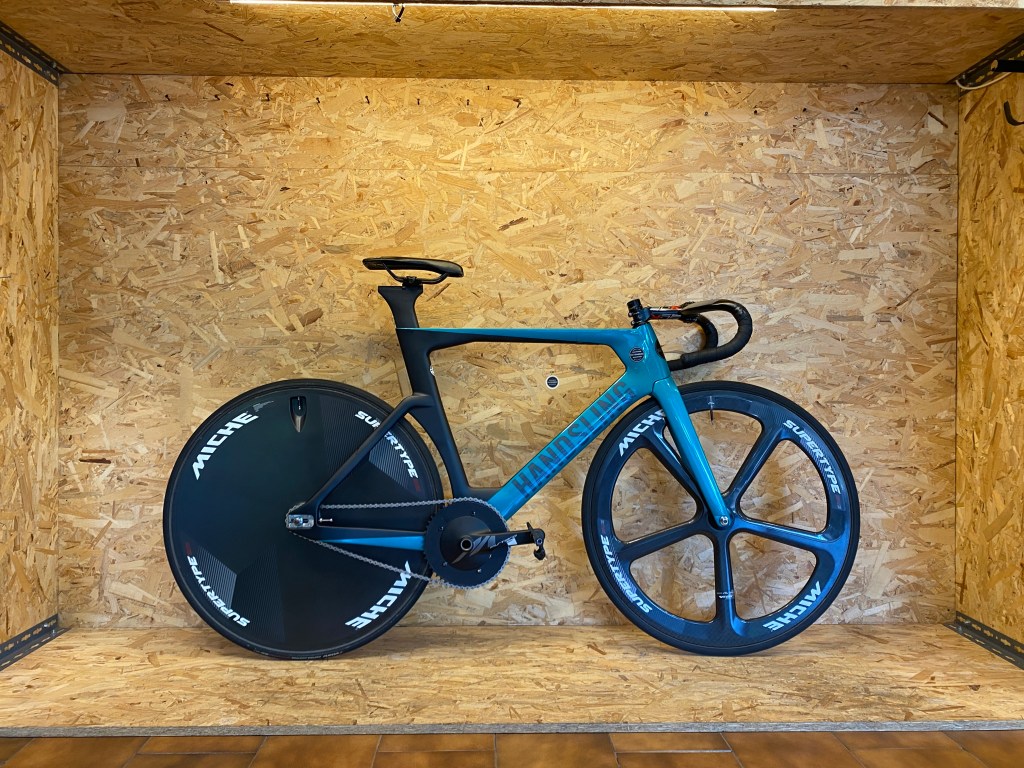
The defining feature of a track bike is the fixed gear.
This means that:
- the pedals are always connected to the rear wheel
- there is no freewheel
- you never stop pedalling
On the track:
- there are no brakes
- slowing down is done by modulating the pedalling
- stopping abruptly is dangerous
Fixed gear allows:
- total control of the bike
- smoothness
- precise speed management
RGearing: One Gear, Chosen Carefully
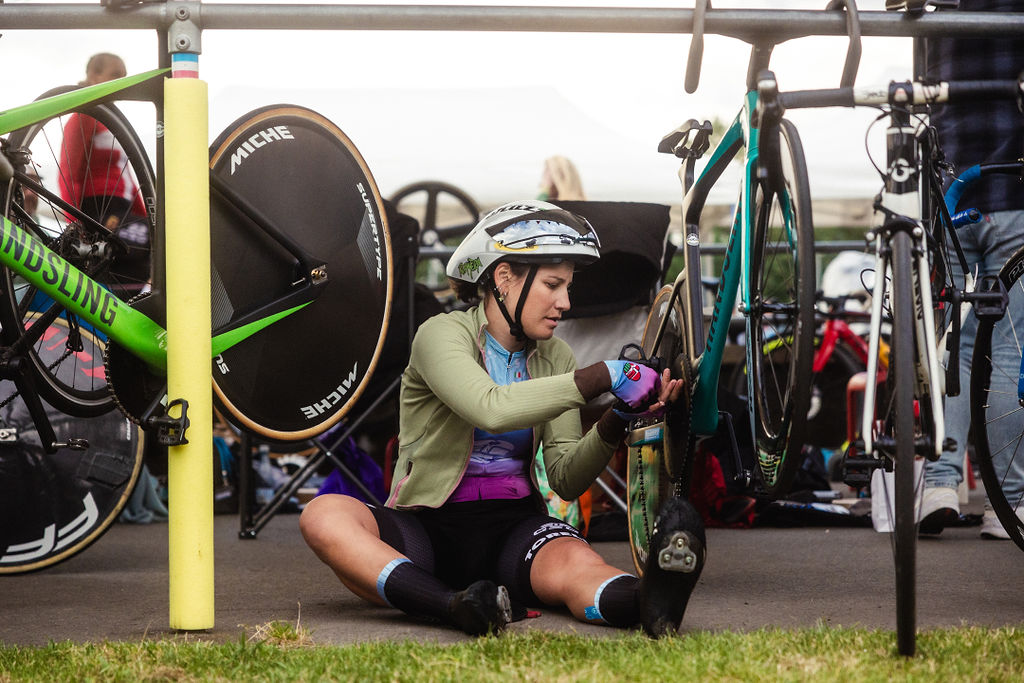
A track bike has:
- a single chainring
- a single sprocket
- one gear for the entire race
In the video, for example, I use a 68×18, because in that event the gear choice was not free.
The gear is chosen based on:
- the type of race
- the discipline (sprint or endurance)
- the rider’s sensations
- personal preferences
- the competitors in the race
Gear selection is part of race preparation and cannot be changed during the event.
Handlebar and Riding Position
Another major difference compared to road bikes is the handlebar.
On the track:
- handlebars are “bare”
- there are no shifters
- there are no brake levers
Custom-made components are very common.
In my case:
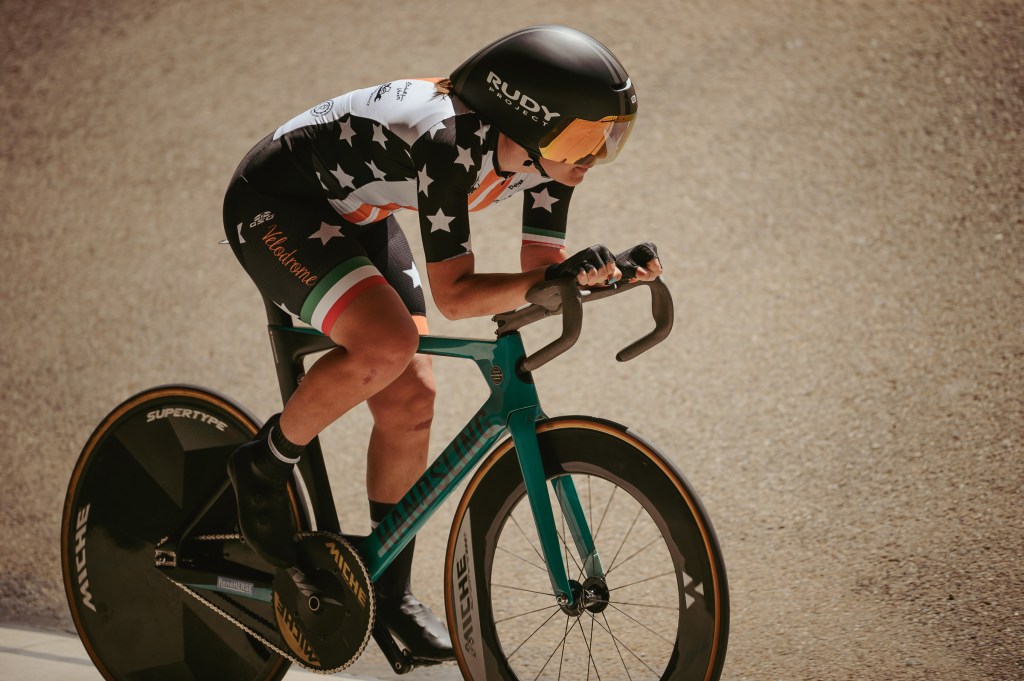
- UCI-approved handlebar
- custom-made stem
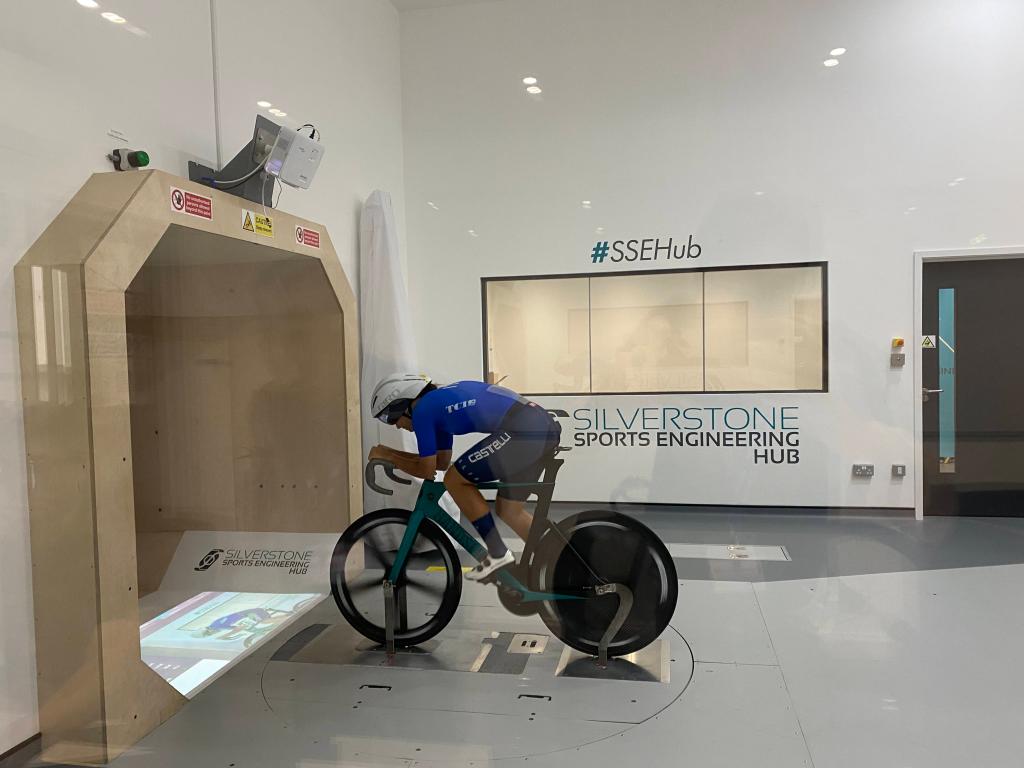
This allows for a position that is:
- developed in the wind tunnel
- optimized for maximum performance
Here, a clearer distinction emerges between:
- sprinters, who use more traditional handlebars
- endurance riders, who in recent years have adopted handlebars with upper extensions (“horns”) to achieve a time-trial–like position
For disciplines such as:
- individual pursuit
- team pursuit
- kilometre time trial
actual time-trial extensions and bars are used.
Crank Length: A Personal Choice
Crank length is also a personal choice on the track.
Personally, I use 165 mm cranks, but:
- some riders prefer longer cranks
- others prefer shorter ones
This depends on biomechanics, pedalling style, and personal preference, just like on the road.
Conclusion
A track bike is designed for:
- a closed environment
- very high speeds
- maximum efficiency
Stiffness, simplicity, and precision are its key characteristics.
Understanding these differences helps to:
- better interpret races
- understand athletes’ technical choices
- approach track cycling with greater awareness
Watch the Full Video
🎥 L’Angolo di Francesca #3 – Track Bike Features and Differences Compared to a Road Bike
Filmed at the Lee Valley Velodrome in London, Olympic venue of 2012.
☕ Want to support the project?
👉 https://buymeacoffee.com/ridewithfranci
💬 Have questions about track bikes or components? Leave a comment.
 Francesca Selva
One Reply to “”