
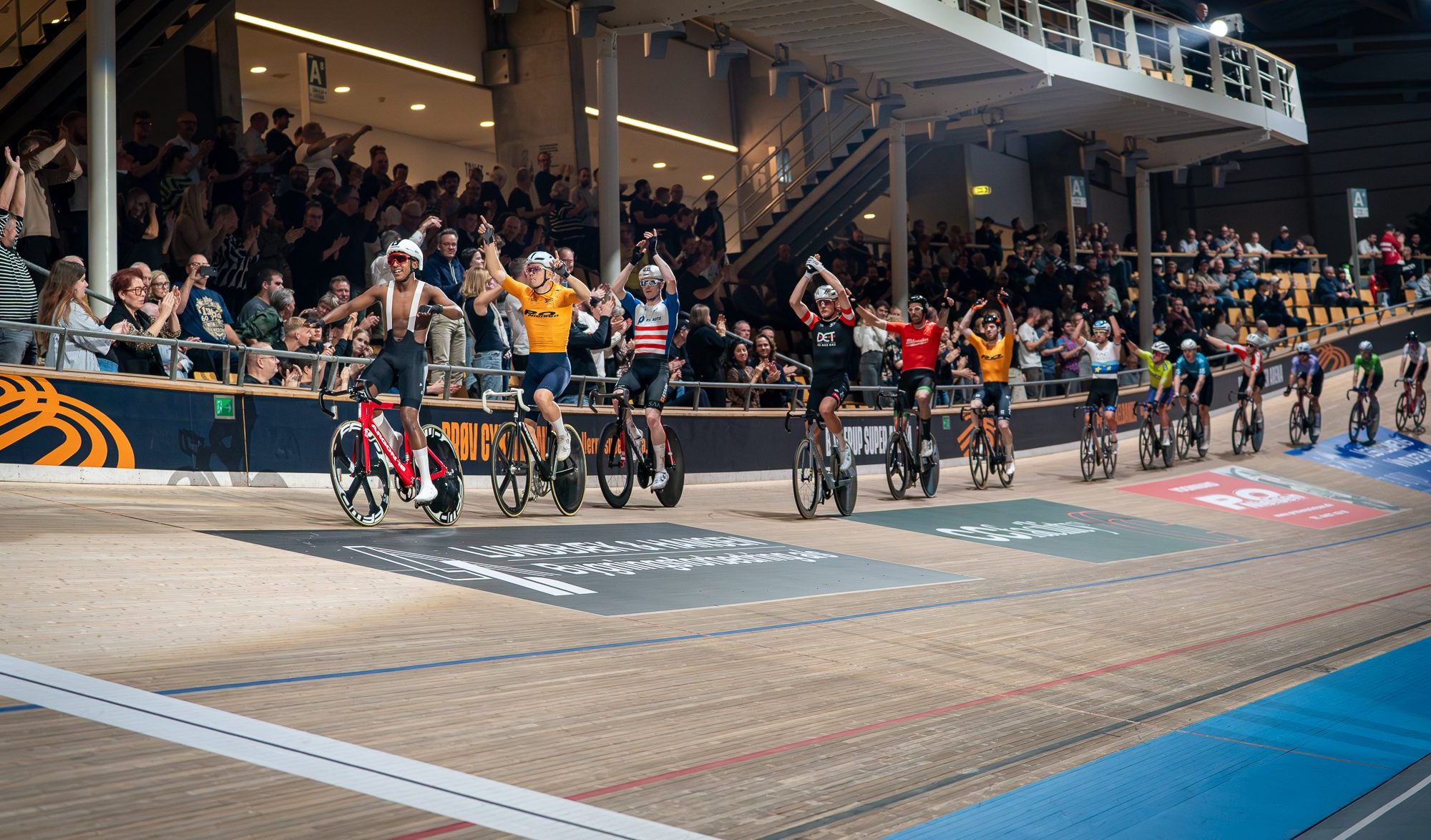
From Six-Day Tradition to Modern Track Cycling
The Three Days of Copenhagen is one of those events that, from the outside, can look chaotic: short races, constant action, different categories on track every night for three nights in a row.
But behind that, there is a very structured system, built on almost a century of track cycling tradition.
🎥 https://youtu.be/snazqwehbC4
From Six Days to Three
Track cycling in Copenhagen has deep roots. The first edition of the historic Six Days of Copenhagen dates back to 1934, when races were held in the Forum venue in the city.
For decades, the Six Days format defined professional track racing: long events, multiple sessions, and a strong connection between sport and entertainment.
Over time, however, the sport had to adapt.
Modern racing calendars, travel demands, and audience behavior led to shorter formats. After the final Six Days edition in 2019, the event evolved into a more compact version — the 3-day race we see today.
Since 2001, the event has been hosted at the Ballerup Super Arena, which remains one of the key indoor velodromes in Europe.
A Modern Format Built for Today’s Cycling
The Copenhagen 3-day event is organized by DBC Ballerup and is now part of the international track cycling calendar.
Instead of a single race, the event is a multi-discipline competition spread over three days.
Riders compete in:
- Madison
- Points race
- Elimination
- Scratch
- longest lap
- flying lap
- team elimination
- derny
- giantsprint
Results accumulate across sessions, creating an overall classification based on laps and points.
At the same time, the event includes multiple categories:
- Elite Men
- Elite Women
- Talent
- Mini (youth)
This creates a continuous flow of racing, where different levels share the same stage — something quite unique compared to other cycling events.
More Than Just Racing
What makes this event different is not only the format, but the environment.
Inside the velodrome, everything happens at the same time:
- riders warming up
- races starting every few minutes
- constant transitions between disciplines
- VIP tables close to the riders
- lights and music effects
It’s not a single peak moment — it’s a progressive build-up over three days, with the final night deciding the overall winners.
From the outside, it might look like a sequence of short races.
From the inside, it’s a system where consistency matters more than a single result.
A Strong Danish Identity
Denmark has a long-standing tradition in track cycling, and this event reflects it.
The so-called “Danish pair” — traditionally racing with number 7 — is often among the favorites, representing a cultural element that connects modern racing to its historical roots.
(I had the onor to race as par nr.7 once in Copenhagen 3days!)
Over the years, the event has featured some of the biggest names in track cycling, and Denmark continues to be one of the strongest nations in the discipline.
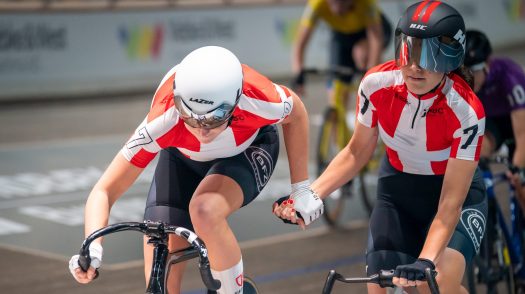
What Happened in the 2025 Edition
The 2025 edition of the Three Days of Copenhagen continued this tradition, with three days of racing culminating in the final classifications.
🏆 Elite Men: Robin Skivild / Conrad Haugsted (Denmark)
🥈 L. Normann Leth • T. Aagaard
🥉 V. Hoppezak • Y. Dorenbos
🏆 Elite Women: Amalie Dideriksen / Ida Fialla (Denmark)
🥈 M. Andres • J. Knight
🥉 M. Brandwagt • Y. Molen
🏆 Talent: V. Wagner • J. Andersen
🥈 A. Svenningsen • J. Resen
🥉 K. Solsbæk • N. Solsbæk
🏆 Mini: S. Riis • A. Sonne
🥈 S. Jensen • R. Vestergård
🥉 C. Almblad-Retzel • O. Domdey
The final night brought together all categories, with standings shaped by the accumulated results across the event.
Closing
Events like this are not always easy to understand from the outside, but that’s also what makes them interesting.
They sit somewhere between tradition and modern sport — keeping the heritage of Six Day racing while adapting to today’s cycling world.
🎥 To see how this actually looks inside the velodrome, you can watch the full video here:
 Francesca Selva
One Reply to “”