
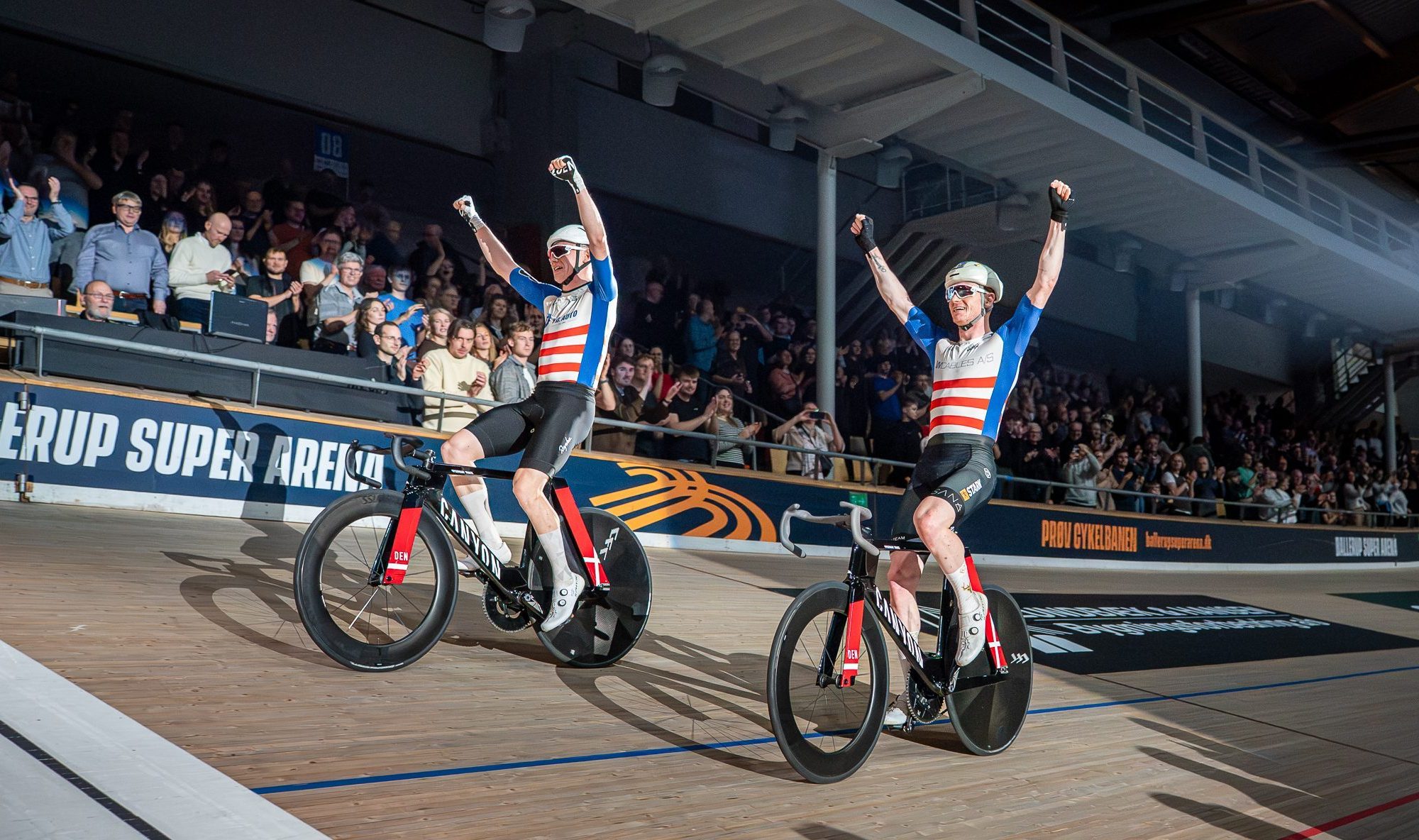
At the Ballerup Super Arena, one of the most unique and least understood events in track cycling takes place every year around New Year: the 100 kilometer Madison.
It’s a race that doesn’t really fit into modern cycling anymore — long, complex, and deeply rooted in tradition — yet it remains one of the most fascinating formats still raced today.
A Race Built on Tradition
The event is part of the Danish New Year’s track meeting, organized by DBC Ballerup.
Its format comes directly from the legacy of Six Day racing, where endurance, tactics, and teamwork define the outcome far more than short-term explosiveness.
While the Madison itself has deep roots in track cycling, the 100 km format in Ballerup is a more recent addition.
It was first introduced in 2012, when former Six Day organizer Henrik Elmgreen included a 100 km Madison in what would be his final edition of the Copenhagen Six Day race.
The format returned in 2015 as part of the DBC New Year’s Meeting, and has since become a regular feature of the event.
At 100 kilometers — 400 laps on a 250-meter indoor track — this is not just a race of speed, but a race of control.
It’s not a traditional Six Day race — but it carries the same DNA.
Speed Changes Everything
At that distance, the race is not only long — it’s fast.
The current track record at the Ballerup Super Arena was set in 2024 by Aaron Gate and Matias Malmberg, who completed the 100 kilometers in 1:45:37 — with an average speed of 56.8 km/h.
Which means everything — including feeding — happens at a speed where there is almost no margin for error.
More Than Just a Madison
For those familiar with track cycling, the Madison itself is nothing new.
But this version is different.
The length of the race changes everything:
- pacing becomes critical
- positioning matters over time, not just in moments
- mistakes are amplified across hundreds of laps
The strongest teams are not necessarily the fastest — they are the ones who manage the race best.
Feeding… on Track
One of the most unique aspects of this race is something rarely seen in modern track cycling:
feeding during the race.
Riders don’t leave the track.
Instead, when resting, they drop down onto the Côte d’Azur — the blue neutral band at the bottom of the track — to receive a bottle from their staff.
Everything happens in motion.
Within just a couple of laps, they need to:
- take the bottle
- drink
- throw it
- and get back into position for the next exchange
At the same time, staff members — including myself — run along the track to collect bottles and quickly return to position, ready for the next rider.
It’s chaotic, fast, and surprisingly precise.
The Race Unfolds
From the start, the pace is high.
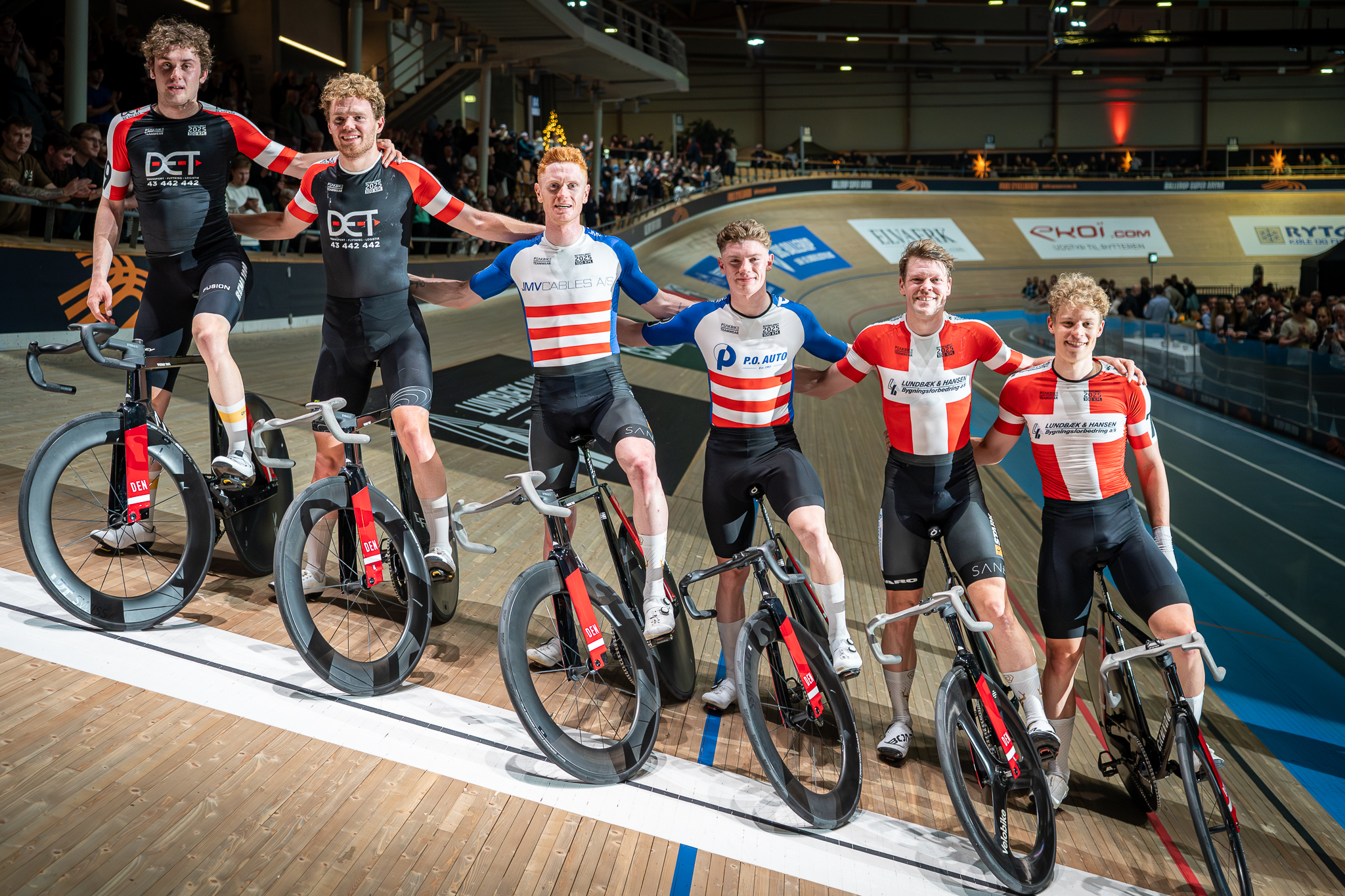
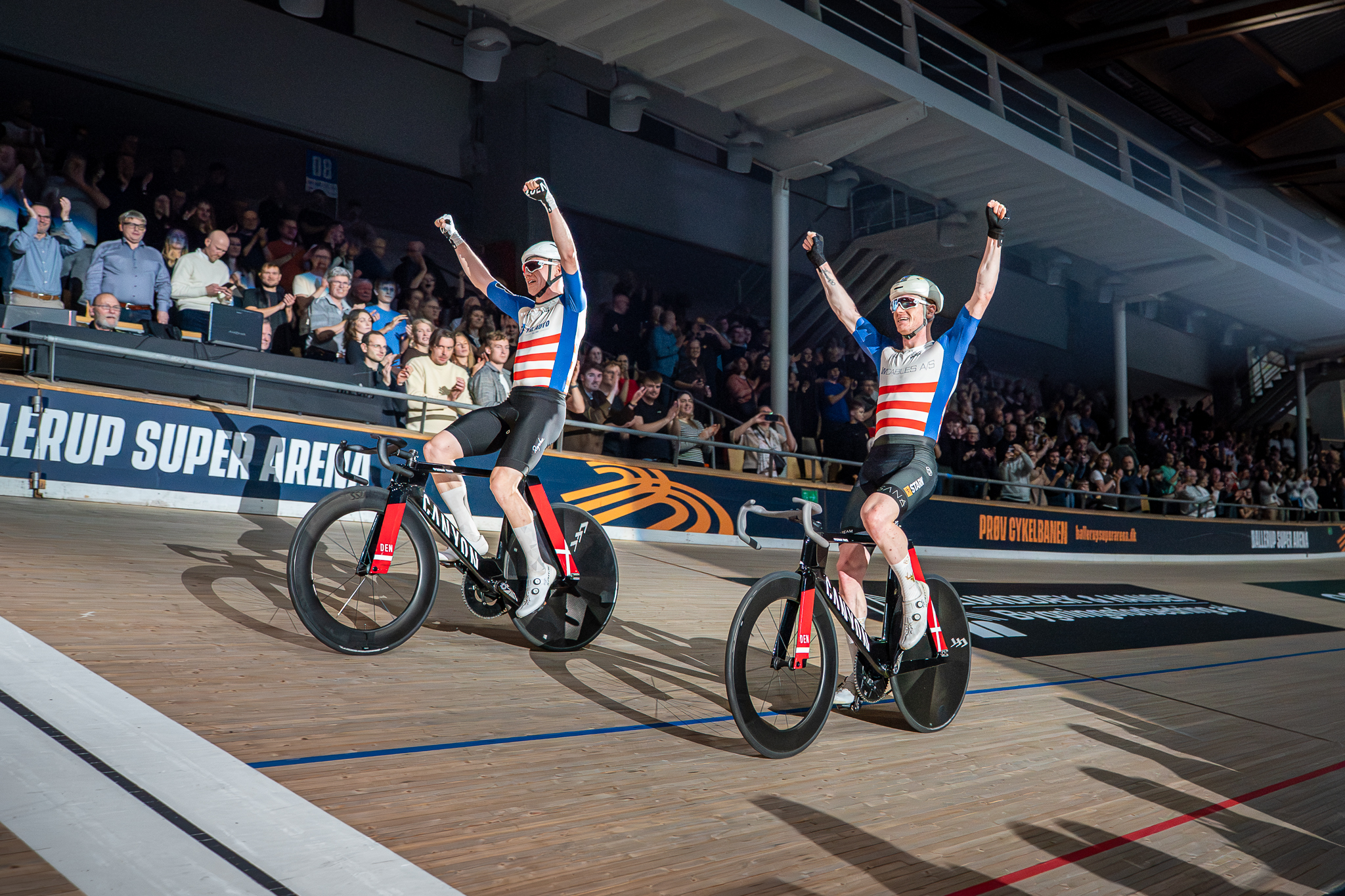
In the 2025 edition, it quickly became clear that Conrad Haugsted and Robin Skivild were among the strongest teams on the track.
Together with their closest rivals, they gained an early lap on the field.
But the decisive moment came midway through the race.
With more than 200 laps still to go, they gained another lap — a move that left them alone at the front.
From that point on, the race became a demonstration of control.
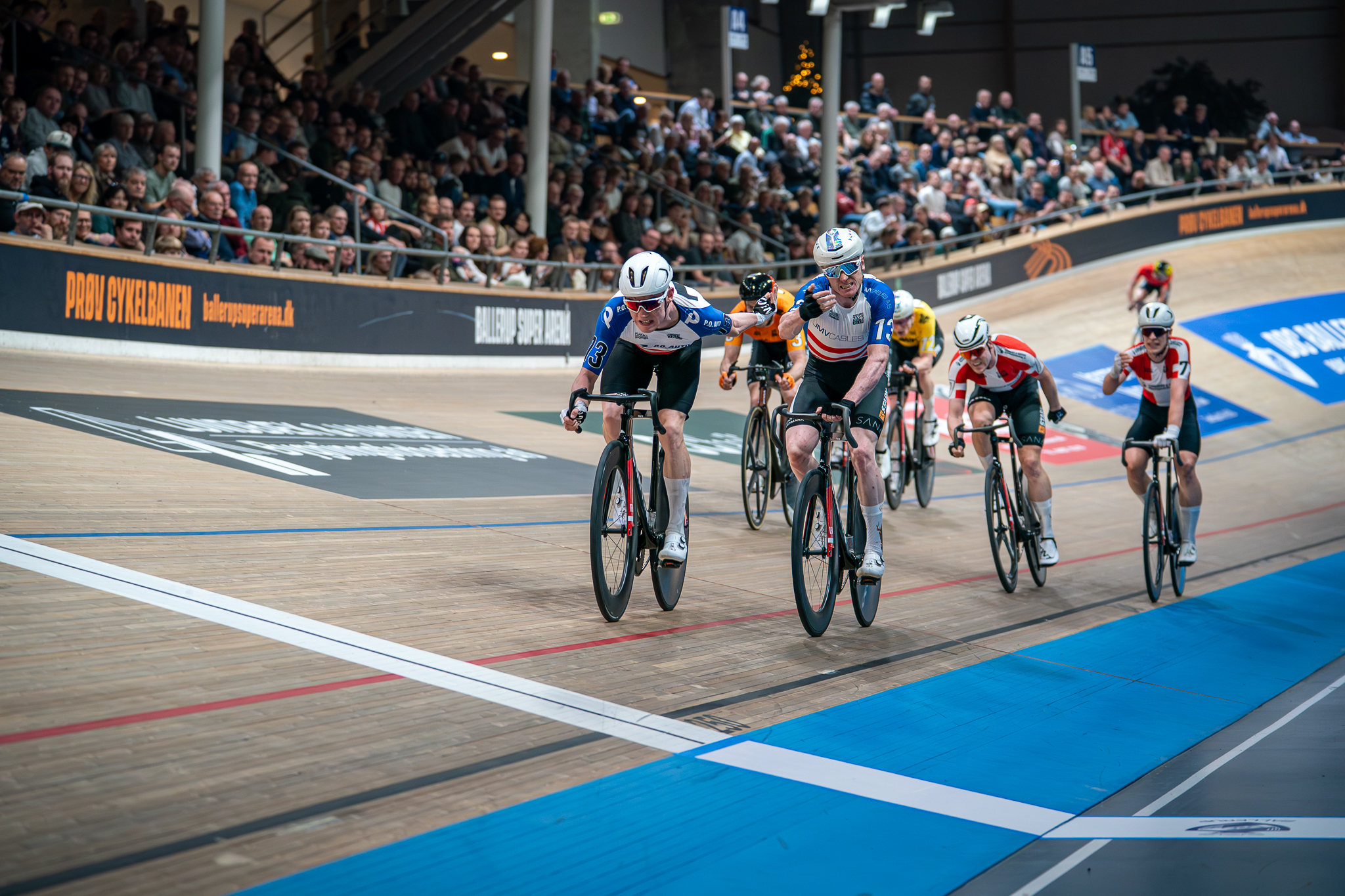
Behind them, the fight for the podium continued until the final laps.
A Moment Worth Noticing
One of the highlights of the evening came from two 15-year-old riders, Valdemar Wagner and Johan Andersen.
In an elite-level race, they managed to take a lap on the entire field — a rare and remarkable achievement that drew a huge reaction from the crowd.
Women’s Racing
The event also featured a full women’s program.
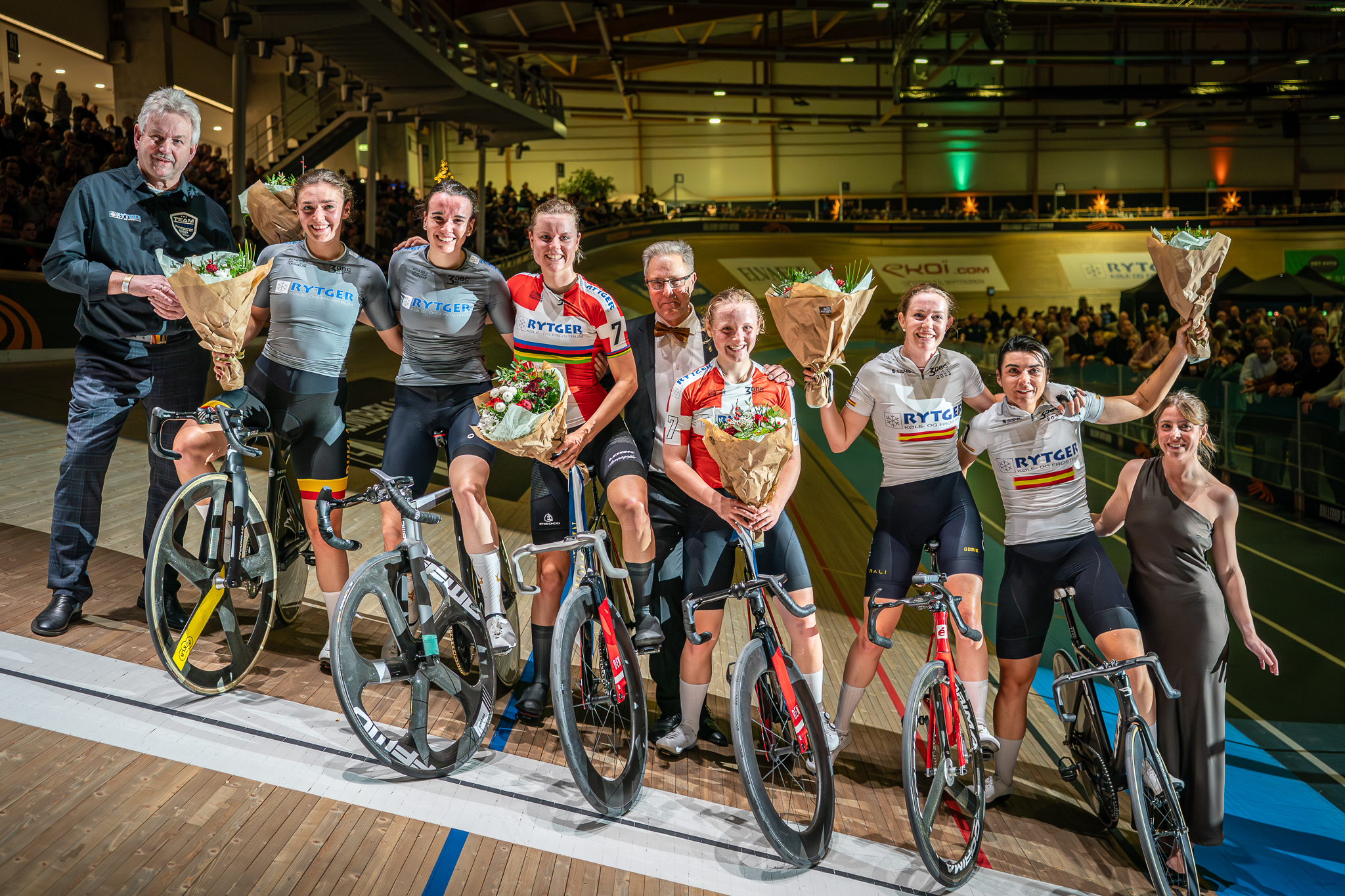
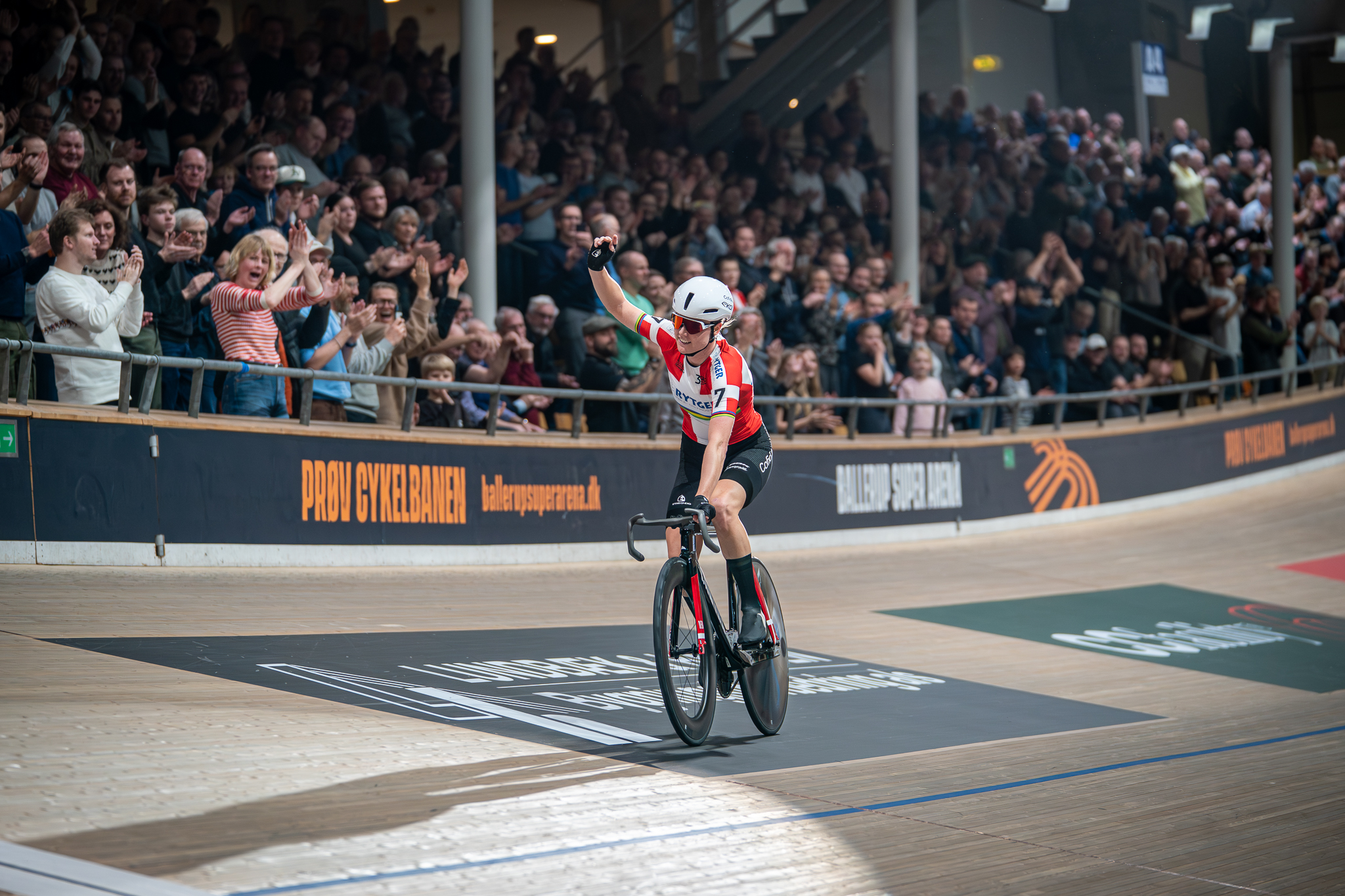
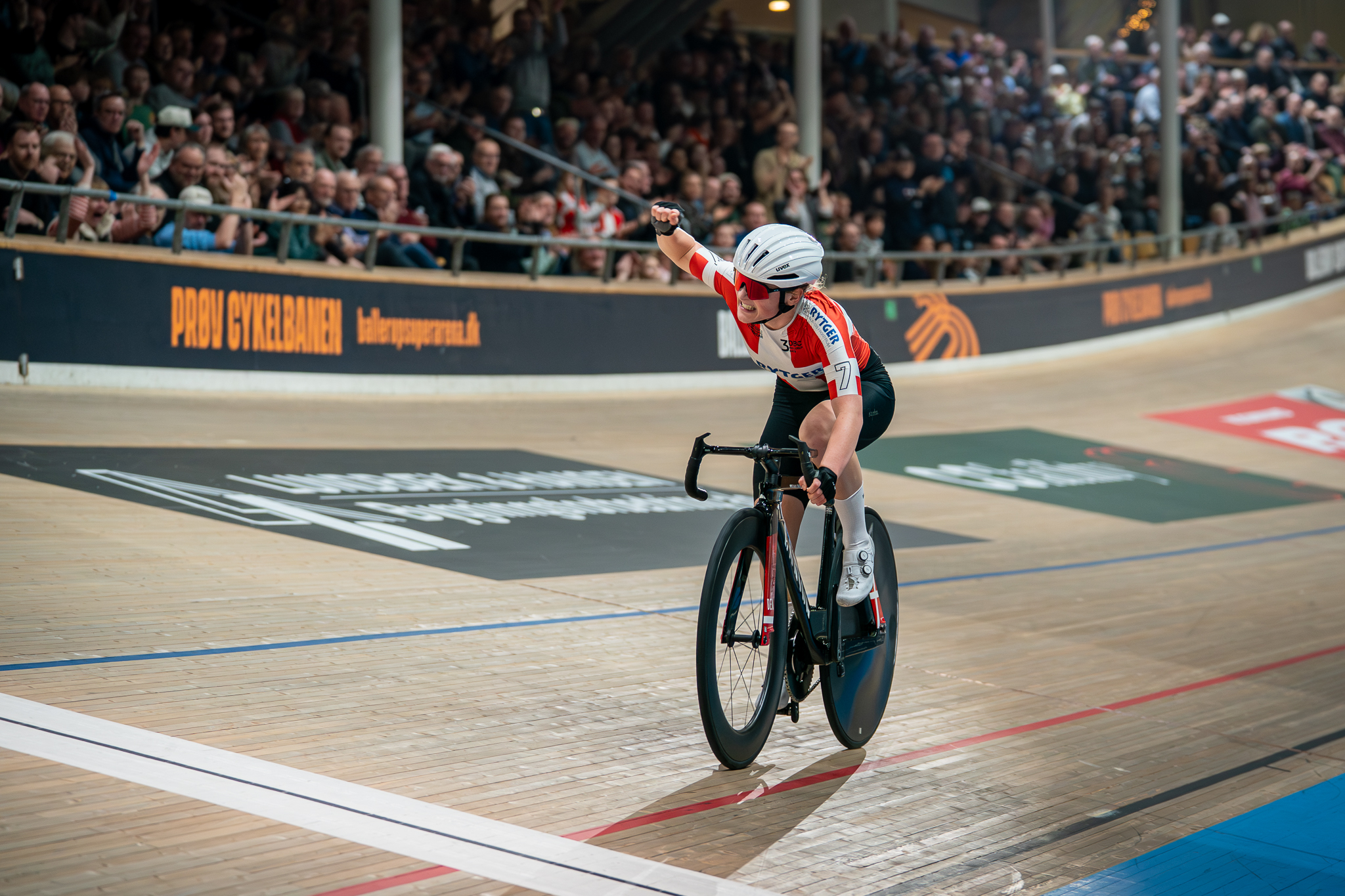
In the Madison, victory went to Ida Fialla and Amalie Dideriksen, confirming the strength and depth of the women’s field within the event.
Why It Still Matters
Events like this are becoming increasingly rare in modern cycling.
The trend has shifted toward shorter, more broadcast-friendly formats.
But races like the 100KM Madison preserve something different:
- long-form racing
- tactical depth
- and a direct connection to the history of track cycling
And if you look at the progression over the years, it’s clear: the race keeps getting faster.
Final Thoughts
The 100KM Madison is not just another race.
It’s a format that forces riders — and everyone involved — to think differently.
And maybe that’s exactly why it’s still worth watching.
Watch the Race
If you want to see what this actually looks like from inside the track, I documented the full experience here:
photo credit: Jesper Skovbølle
 Francesca Selva
One Reply to “”