
It’s a question I’ve been thinking about a lot over the past few months.
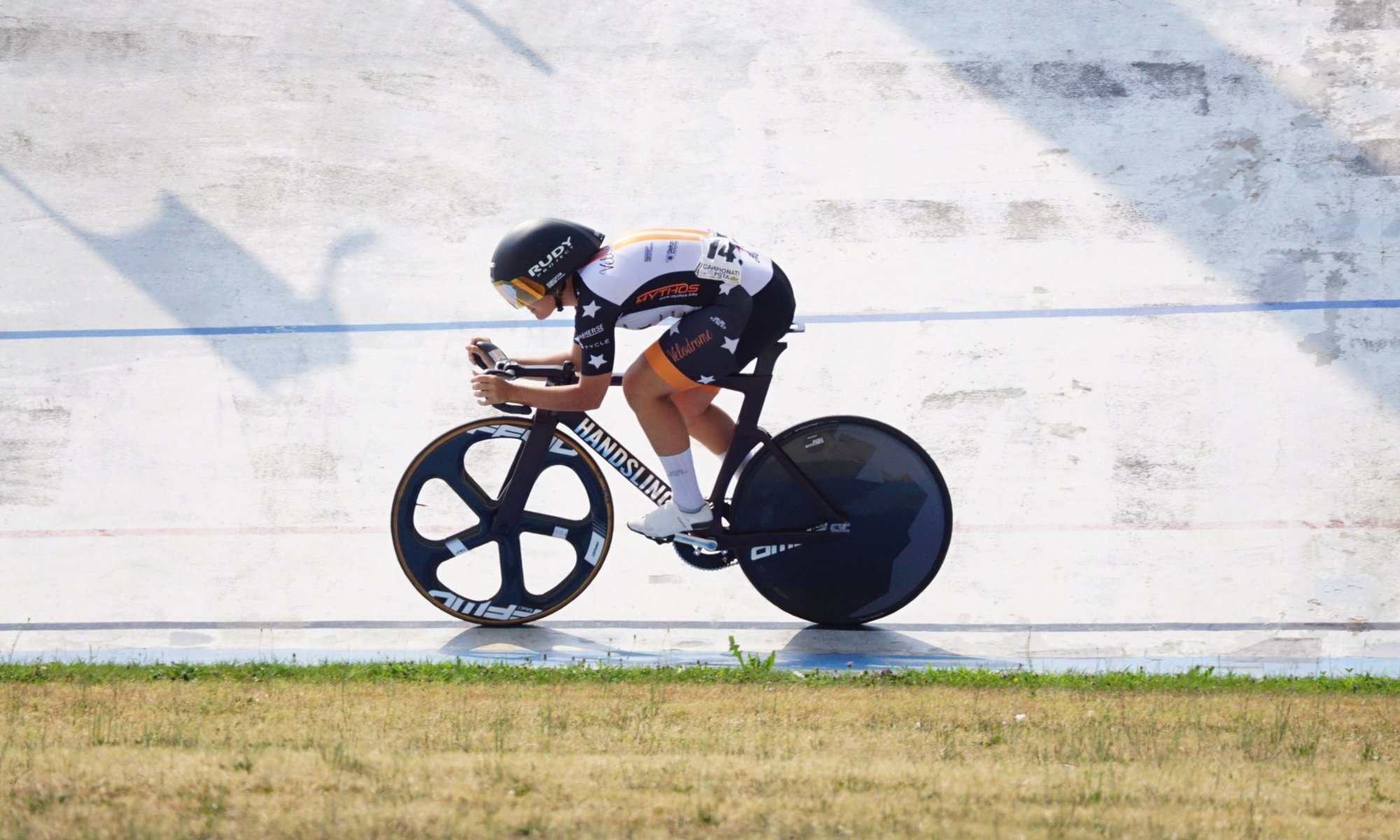
When I announced that I had decided to change disciplines, it was easy to talk about the decision. I had decided to leave endurance behind and start over as a sprinter. I knew why I was doing it, I knew what I wanted to try to achieve, and I knew it was going to be difficult.
But deciding to become something different and actually doing it are two very different things, and over the past few months I’ve really started to understand what it means to be a beginner again.
After closing the endurance chapter, I stayed in Sicily for almost three months. Oskar was there at first, and then I stayed there training on my own.
Sicily has always been a bit of my stop-and-go place. I’ve been going there since 2018 and, over the years, it has become the place where I stop, put the pieces back together and start again whenever something in my life changes. This time I went back there once again, but for the first time I wasn’t trying to become who I used to be.
I was trying to become something new.
I came home in mid-April and started preparing for the first block of races in May. I remember that, while driving to the first races, I recorded a video in the car talking very honestly about my expectations.
The truth is, I didn’t really have any. I had no idea what to expect. Honestly, the first races went better than I thought. The first win was simply never finishing last. There were around 24-25 riders, most of them actual sprinters, and I was consistently somewhere between 11th and 15th. For someone who had just changed disciplines completely, I was happy with that.
I also managed to improve my times throughout that block. On the first day in Prague I had done a high 1:12.6, while on the last day of racing in Germany I got down to 1:12.0. The funny thing is that by that point I was completely exhausted.
I had been racing for almost a month and, in practice, I had been “forced” to race without really being able to train properly between competitions. So the fact that I had still managed to improve was a good sign.
But the most important thing I noticed wasn’t in the numbers. It was in my head. I felt more like it was my first day of school than like an athlete who had been racing for years. My legs were responding, and I was strong enough to do certain things. But my instincts were still those of an endurance athlete. My reactions, my timing, the way I interpreted what was happening in a race: everything was built around the discipline I had done for years.
And suddenly I had to learn to react differently.
Sprint is immediate. Everything happens quickly and you have to be ready to react before you even have time to think. That was probably one of the hardest things to get used to.
In endurance, I’m used to races where everything lasts forever. Even three laps can feel incredibly long to me, because I’m waiting for something to happen. I’m used to having time to read the race.
In sprint, you don’t have that luxury. And for the first time in my career, being in the second half of the standings didn’t bother me. It motivated me.
Everything was new, and that meant everything was something I could improve. It was a completely different feeling from what I had experienced during the last few years of endurance.
After the European races, I flew to the United States and stayed there for about a month, but I didn’t have access to a velodrome or the technical equipment I needed to properly train as a sprinter. So I trained on the road and in the gym for about three weeks. I managed to rebuild my strength and get more or less back to the numbers I had reached before the May races.
And just when I was starting to feel like I was getting back to a good level, I went racing in Los Angeles: three days of racing — sprint, keirin, sprint. The first day was a disaster.
I completely mismanaged the effort in the 200-metre qualifying round. I had chosen a gear that was too big because I was indoors and thought I could handle it. Instead, I went slower than I had in my previous race in Germany, outdoors. It was frustrating, but it taught me a lot.
The next day I had a break in the afternoon, with the track open. I spent about three hours alone on the track, simply riding around and practising the flying 200-metre effort. Again and again. I went back to the gear I had used outdoors and thought: at worst, I’ll do the same time.
On the third day, for the first time, I went under 12 seconds: a high 11.9. From the outside, it’s nothing extraordinary, but for me it was an important step. Not just because of the number, but because of how I got there. I had spent three hours repeating a movement that still doesn’t come naturally to me. I have to learn it simply by doing it, again and again. And it made me realise something very clearly: you can’t really prepare to become a sprinter if you don’t have a track where you can train and practise these things.
You can lift weights, you can ride on the road, you can work on your fitness. But some things simply have to become instinct, and that takes time.
Being in Los Angeles was special for another reason too, obviously. Racing in that velodrome, knowing that it will be the Olympic velodrome, made everything feel much more real. But it didn’t change how I feel about the project. I still know exactly what I want to do. The 200 metres, the keirin, all the races I’m doing now are part of the process. My real goal is Team Sprint.
I wish I could train and race with one single goal in mind, have one precise thing to work towards every day, but I’m not there yet.
For now, I have to learn as much as possible, race as much as possible and build myself into the best sprinter I can become.
Then I’ll find out if it’s enough.
After Los Angeles, I went back to Dallas for a week of recovery and then returned to Italy. I landed on Tuesday and was already racing in Pordenone on Wednesday. It was one of those races where, once it’s over, you know you could have done better. I got tactically caught out, got boxed in and didn’t make the final. I was pissed off, especially because I felt like my legs were there. I had simply made a mistake.
Then came Fiorenzuola, where I spent the whole week working much more than racing.
And after that, the Italian Championships, where I thought I would finally be able to show what I had built over the previous months.
Instead, I proved the opposite.
I was done. Before I even raced, my legs were already hurting.
My numbers were the worst of the season, as were my times and how I felt. I had never had this kind of leg pain before: my legs hurt even just sitting on a chair. And that was the real problem: I still had to race, and my legs were already like that.
Even finishing second in the Team Sprint couldn’t change the feeling I left those championships with. I needed to stop, so I took a week off and started again.
And maybe that’s the most important thing I’ve learned over these past few months. I can’t keep trying to train well, improve and become a better sprinter while constantly travelling, racing, working and moving from one thing to another. If I really want to find out what I can become, I need a routine, consistency in my training, and an entire winter where I can sacrifice everything else and focus on building my body for this. I’m not that far from where I was in May, but first I have to get back there, and then I have to go much further.
The strange thing is that, despite the bad races, the lack of training, the travelling and the fact that I’m still very far from the level I want to reach, I have never missed endurance.
Not even a little bit.
In Germany I also had to race some endurance events because there weren’t enough riders, and every time I saw a Points Race starting I was incredibly happy that I wasn’t the one who had to do a hundred laps. I’m genuinely happy to have left it behind.
What I miss sometimes is the confidence I had. I spent years knowing exactly what I was doing. I know how to race a Madison, I know how to read a Scratch, I knew how to react.
Now I’m back at the beginning.
And, strangely enough, I think I needed that. After so many years of doing the same thing, I needed something that would make me feel like I still had so much to learn. Something that would give me motivation again, that would make me want to train. Because this is probably the biggest difference I feel today. My body is changing. I’m bigger than I used to be. I know people notice it, and I know people judge appearances, especially on social media.
But I also know why I’m doing it. I’m not changing my body because I want to look different.
I’m changing it because I want to become stronger. And, most importantly, I feel good.
There isn’t a single day when I don’t feel like training. To me, that says more than anything else. I’m 27. I know I started late, and I know how big the gap is and how many years it might take, if I ever manage to get there. But I also know I would have regretted not trying.
For years I wondered what it would be like to live this life as a sprinter. I joked about it, thought about it, imagined it, but I had never really had the courage or the opportunity to find out.
Now I do.
Maybe I’ll make it.
Maybe I won’t.
Maybe sooner or later I’ll discover there’s a limit I can’t get past.
But at least I’ll finally find out.
And whatever happens, I’m happy I had the courage to try, because this is still the dream I’ve had for such a long time: to live this life, to train every day for something I truly want, to see how far I can take myself.
Maybe I started late. But at least I started. And right now, that’s enough for me to know I made the right choice.


One Reply to “”